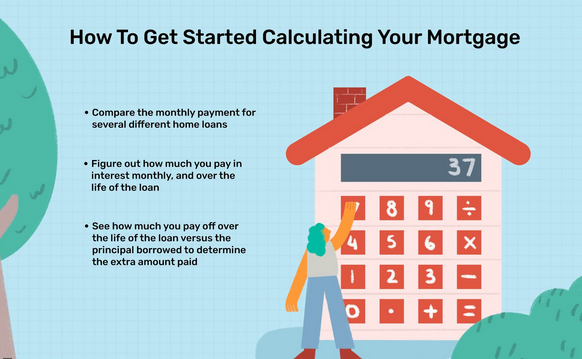
Buying a home is one of the biggest financial decisions most people will make in their lifetime. Whether you are purchasing your first house or refinancing an existing property, understanding your mortgage payments is essential. A mortgage loan calculator is a powerful financial tool that helps borrowers estimate their monthly payments, evaluate affordability, and plan their long-term finances.
Many homebuyers feel overwhelmed by the complexity of mortgage calculations. Interest rates, loan terms, down payments, taxes, and insurance all influence the total cost of homeownership. A mortgage calculator simplifies these calculations by providing quick estimates based on a few key inputs.
This article provides a detailed guide on mortgage loan calculators, how they work, and how you can use them to estimate your monthly payments accurately.
Understanding What a Mortgage Is
Before exploring mortgage calculators, it is important to understand what a mortgage loan actually is.
A mortgage is a type of loan used to purchase real estate. The borrower receives money from a lender, typically a bank or financial institution, and agrees to repay the loan over time with interest. The property being purchased acts as collateral for the loan. If the borrower fails to make payments, the lender may have the legal right to repossess the property through foreclosure.
Mortgage loans are typically long-term financial commitments that last between 15 and 30 years, although other terms may also be available.
A mortgage payment generally consists of four main components:
-
Principal
-
Interest
-
Taxes
-
Insurance
These components are often referred to as PITI.
What Is a Mortgage Loan Calculator?
A mortgage loan calculator is an online or software-based tool designed to estimate the monthly payments required to repay a mortgage loan.
By entering basic financial details such as loan amount, interest rate, and loan term, users can quickly calculate:
-
Monthly mortgage payments
-
Total interest paid over time
-
Total cost of the loan
-
Amortization schedules
Mortgage calculators are widely used by homebuyers, real estate agents, and financial advisors to help determine whether a property is financially manageable.
Why Mortgage Calculators Are Important
Mortgage calculators are valuable because they help borrowers make informed financial decisions. Without calculating estimated payments, buyers may commit to loans that are difficult to afford in the long run.
Some key benefits of mortgage calculators include:
1. Financial Planning
A mortgage calculator helps individuals understand how much they will need to pay every month. This allows them to create realistic budgets.
2. Comparing Loan Options
Borrowers can test different scenarios by adjusting interest rates, loan terms, or down payments.
3. Understanding Loan Costs
Mortgage calculators reveal the total interest paid over the life of the loan, helping borrowers understand the real cost of borrowing.
4. Determining Affordability
Before applying for a mortgage, buyers can estimate whether they can comfortably afford a particular home price.
Key Inputs Required for a Mortgage Calculator
To estimate mortgage payments accurately, a mortgage calculator requires several pieces of financial information.
Loan Amount
The loan amount is the total amount borrowed from the lender. It is usually calculated as:
Home price – Down payment = Loan amount
For example:
-
Home price: $300,000
-
Down payment: $60,000
-
Loan amount: $240,000
Interest Rate
The interest rate represents the cost of borrowing money. It is expressed as a percentage of the loan amount.
Interest rates can vary depending on:
-
Market conditions
-
Credit score
-
Loan type
-
Loan term
Even small changes in interest rates can significantly affect monthly payments.
Loan Term
The loan term is the amount of time borrowers have to repay the loan.
Common mortgage terms include:
-
30-year mortgage
-
20-year mortgage
-
15-year mortgage
-
10-year mortgage
Shorter loan terms typically have higher monthly payments but lower total interest costs.
Down Payment
The down payment is the amount of money paid upfront when purchasing a property.
Typical down payments range from:
-
3% to 20% of the home price
A larger down payment reduces the loan amount and lowers monthly payments.
Property Taxes
Property taxes are annual taxes paid to local governments based on the value of the property.
Mortgage calculators often include estimated monthly property taxes in the payment calculation.
Homeowners Insurance
Most lenders require borrowers to maintain homeowners insurance to protect the property from damage or loss.
This cost is usually added to the monthly mortgage payment.
The Mortgage Payment Formula Explained
Although mortgage calculators automatically compute results, it is helpful to understand the formula behind the calculation.
Mortgage payments are calculated using a standard loan amortization formula that considers:
-
Principal
-
Interest rate
-
Loan term
The formula determines a fixed monthly payment that covers both principal and interest over the life of the loan.
At the beginning of the loan, a larger portion of the payment goes toward interest. Over time, more of the payment goes toward reducing the principal balance.
Example of a Mortgage Payment Calculation
Consider the following scenario:
Home price: $400,000
Down payment: $80,000
Loan amount: $320,000
Interest rate: 6%
Loan term: 30 years
Using a mortgage calculator, the estimated monthly principal and interest payment would be approximately:
$1,918 per month
However, once property taxes, insurance, and other costs are added, the total monthly payment may be higher.
For example:
Principal and interest: $1,918
Property taxes: $350
Insurance: $150
Total monthly payment: $2,418
Understanding Mortgage Amortization
Amortization refers to the process of gradually paying off a loan through regular payments.
Each mortgage payment is divided into two parts:
-
Interest payment
-
Principal repayment
At the start of the loan:
-
Interest makes up most of the payment
-
Principal repayment is small
As the loan progresses:
-
Interest decreases
-
Principal repayment increases
Mortgage calculators often include an amortization schedule that shows how each payment is distributed over time.
Types of Mortgage Loans
Mortgage calculators can be used for different types of home loans. Understanding these loan types helps borrowers choose the best option for their situation.
Fixed-Rate Mortgages
A fixed-rate mortgage has an interest rate that remains constant throughout the life of the loan.
Benefits include:
-
Predictable monthly payments
-
Protection from rising interest rates
-
Easier budgeting
This is the most common type of mortgage.
Adjustable-Rate Mortgages (ARMs)
Adjustable-rate mortgages have interest rates that change periodically after an initial fixed period.
For example:
-
5/1 ARM
-
7/1 ARM
-
10/1 ARM
These loans often start with lower interest rates but may increase later.
Mortgage calculators can estimate payments during the fixed period but may not fully predict future rate adjustments.
Interest-Only Mortgages
With an interest-only mortgage, borrowers pay only the interest for a specific period.
During this time:
-
Monthly payments are lower
-
The principal balance does not decrease
After the interest-only period ends, payments increase significantly.
How Down Payments Affect Mortgage Payments
The size of the down payment plays a major role in determining monthly payments.
Benefits of a Larger Down Payment
A larger down payment offers several advantages:
-
Lower monthly payments
-
Reduced loan balance
-
Lower interest costs
-
Possible elimination of private mortgage insurance
For example:
10% down vs 20% down can significantly change the monthly payment and total loan cost.
Understanding Private Mortgage Insurance (PMI)
If a borrower puts down less than 20% of the home price, lenders often require private mortgage insurance (PMI).
PMI protects the lender if the borrower defaults on the loan.
Typical PMI costs range from:
0.3% to 1.5% of the loan amount annually.
Mortgage calculators often include PMI estimates when the down payment is below 20%.
How Interest Rates Affect Mortgage Payments
Interest rates are one of the most important factors in mortgage calculations.
Even small changes in rates can make a large difference in monthly payments.
Example:
Loan amount: $300,000
Loan term: 30 years
Interest rate comparison:
5% interest → about $1,610/month
6% interest → about $1,799/month
7% interest → about $1,996/month
A 2% increase in interest rates adds hundreds of dollars to monthly payments.
Using a Mortgage Calculator Step by Step
Using a mortgage loan calculator is simple and requires only a few steps.
Step 1: Enter the Home Price
Input the purchase price of the property you want to buy.
Step 2: Add Your Down Payment
Enter either the down payment amount or percentage.
Step 3: Enter the Loan Term
Select the length of the mortgage, such as 15 or 30 years.
Step 4: Input the Interest Rate
Enter the estimated mortgage interest rate.
Step 5: Add Additional Costs
Include estimates for:
-
Property taxes
-
Insurance
-
PMI (if applicable)
Step 6: View the Estimated Monthly Payment
The calculator will instantly display the estimated monthly payment and total loan costs.
Benefits of Using Mortgage Calculators Before Buying a Home
Mortgage calculators help buyers avoid financial stress by providing a realistic view of homeownership costs.
Major benefits include:
Better Budgeting
Buyers can determine how much house they can afford before starting their property search.
Smarter Loan Comparisons
Borrowers can test different loan scenarios and choose the best option.
Reduced Financial Risk
Understanding payments ahead of time reduces the chance of taking on unaffordable debt.
Limitations of Mortgage Calculators
Although mortgage calculators are useful tools, they do have some limitations.
Estimates Only
Mortgage calculators provide estimates rather than exact payment figures.
Actual loan terms may vary depending on lender requirements.
Additional Costs
Some calculators may not include certain costs such as:
-
Maintenance
-
HOA fees
-
Closing costs
Interest Rate Changes
Rates used in the calculator may change before loan approval.
Therefore, results should always be considered approximate.
Tips for Getting Accurate Mortgage Estimates
To obtain more accurate estimates from a mortgage calculator, consider the following tips:
Use Realistic Interest Rates
Research current mortgage rates before entering data.
Include All Costs
Add property taxes, insurance, and PMI where applicable.
Test Multiple Scenarios
Try different home prices, down payments, and loan terms.
Consider Future Financial Changes
Ensure that the estimated payment fits comfortably within your long-term budget.
Mortgage Affordability Guidelines
Financial experts often recommend that housing costs should not exceed a certain percentage of your income.
Common guidelines include:
28% Rule
Housing expenses should be no more than 28% of gross monthly income.
36% Rule
Total debt payments, including mortgage, should not exceed 36% of income.
Mortgage calculators can help determine whether a home purchase fits within these guidelines.
Advanced Mortgage Calculator Features
Many modern mortgage calculators include additional tools and features.
Amortization Schedules
These show the breakdown of each monthly payment over time.
Extra Payment Calculations
Users can see how additional payments reduce loan terms and interest costs.
Refinance Calculations
These tools estimate savings from refinancing an existing mortgage.
Affordability Calculators
These determine the maximum home price a borrower can afford.
How Extra Payments Reduce Mortgage Costs
Making extra payments toward the principal can significantly reduce the total interest paid.
Benefits include:
-
Shorter loan terms
-
Lower overall interest costs
-
Faster home equity growth
For example:
Paying an extra $200 per month on a 30-year mortgage can shorten the loan by several years.
Mortgage calculators can simulate the impact of these additional payments.
Mortgage Calculators for Refinancing
Mortgage calculators are also useful when refinancing an existing loan.
Refinancing replaces the current mortgage with a new one, often with better terms.
Borrowers can use calculators to determine:
-
Monthly savings
-
Interest savings
-
Break-even point for closing costs
This helps homeowners decide whether refinancing is financially beneficial.
Conclusion
A mortgage loan calculator is an essential tool for anyone considering buying a home or refinancing a mortgage. It simplifies complex financial calculations and provides valuable insights into monthly payments, interest costs, and overall loan affordability.
By entering a few basic details—such as loan amount, interest rate, loan term, and down payment—borrowers can quickly estimate their mortgage obligations and evaluate different financial scenarios.
While mortgage calculators provide estimates rather than exact figures, they remain one of the most effective tools for planning home purchases and making informed financial decisions.